| |
|
|
|
OK, if you haven't figured it out already, the ultimate destination of this trip was inside the bridge itself. I'll just cut the chat and get to the pictures.
|
|
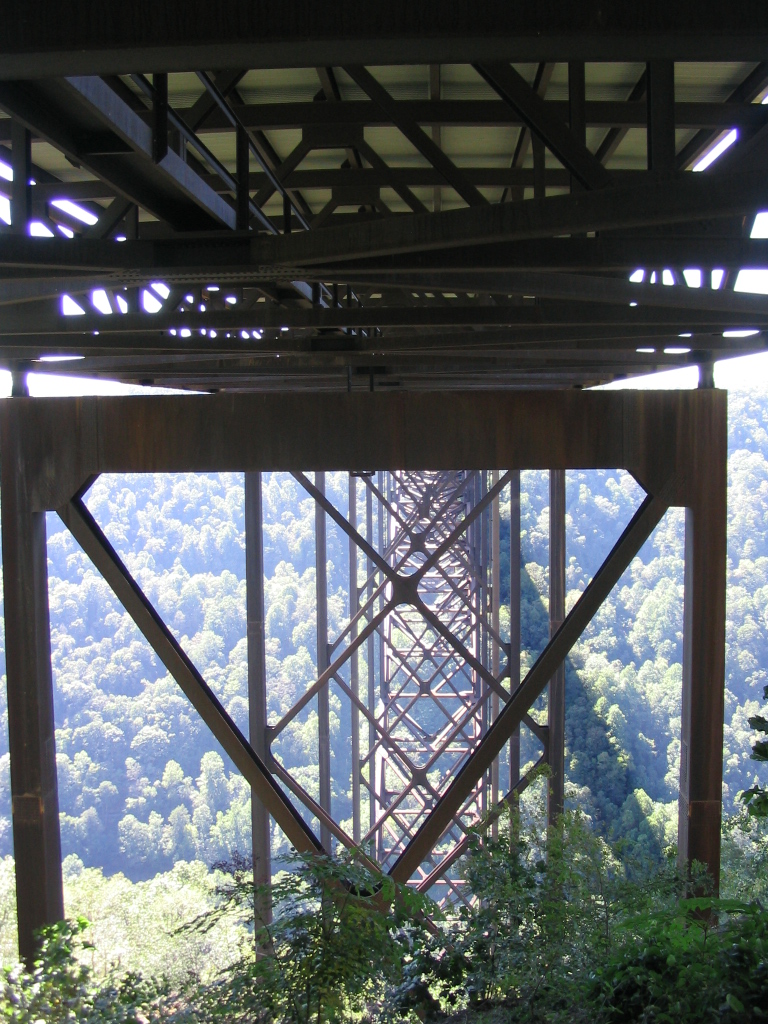
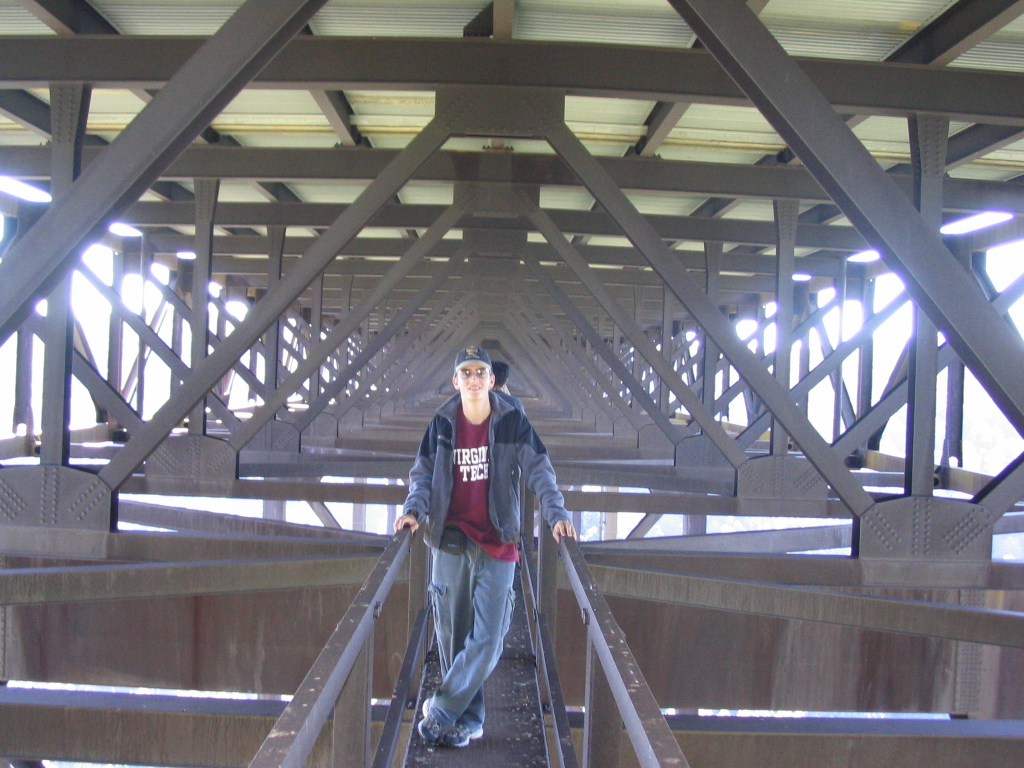
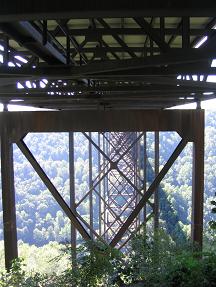
This is the underside of the bridge from the north rim of the gorge. This shot kind of reminds me of those fourth grade art projects where you had to make some kind of desert scene with a road and a fence and some telephone poles using perspective drawing techniques.
|
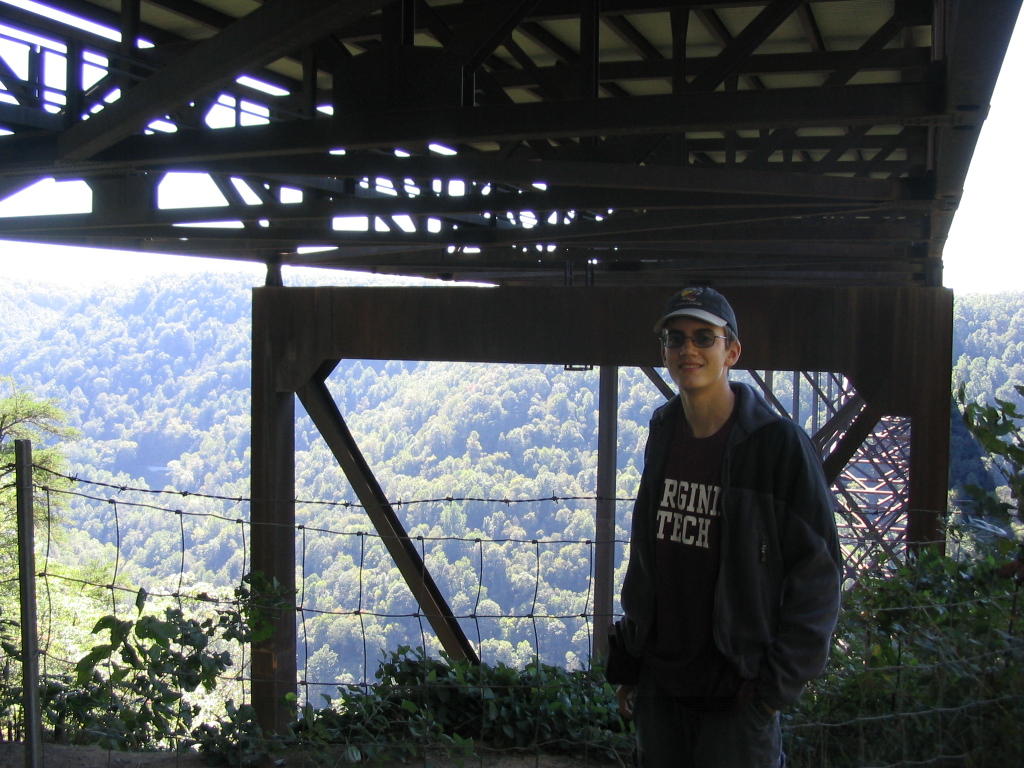
And yes, by popular demand:
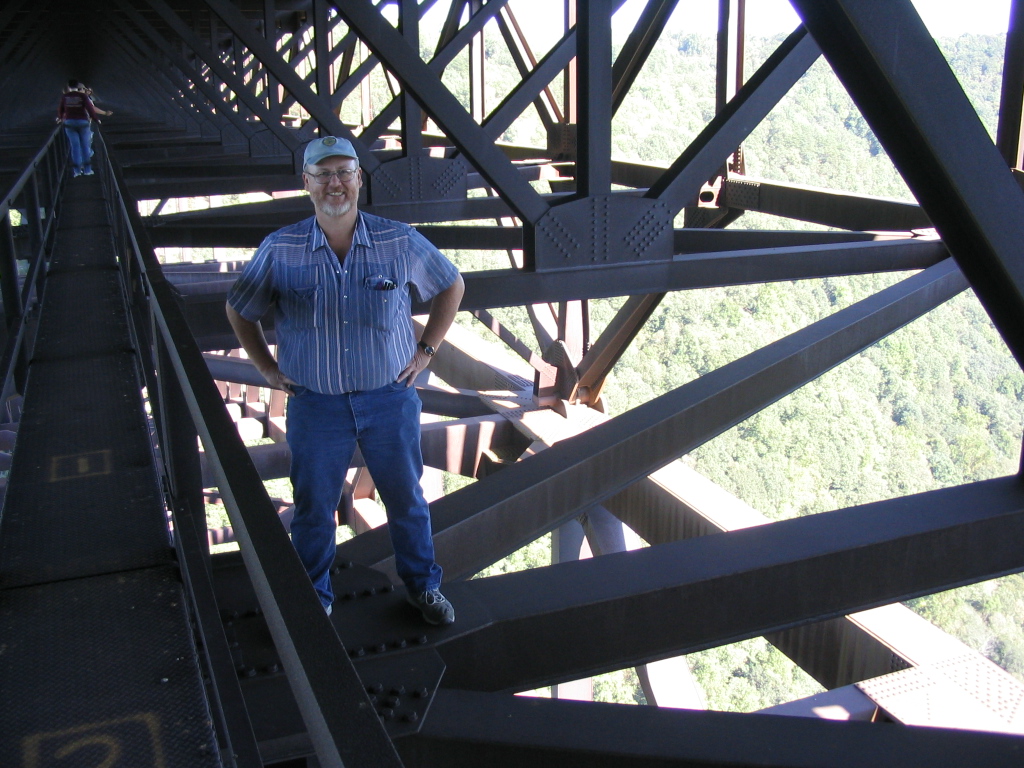
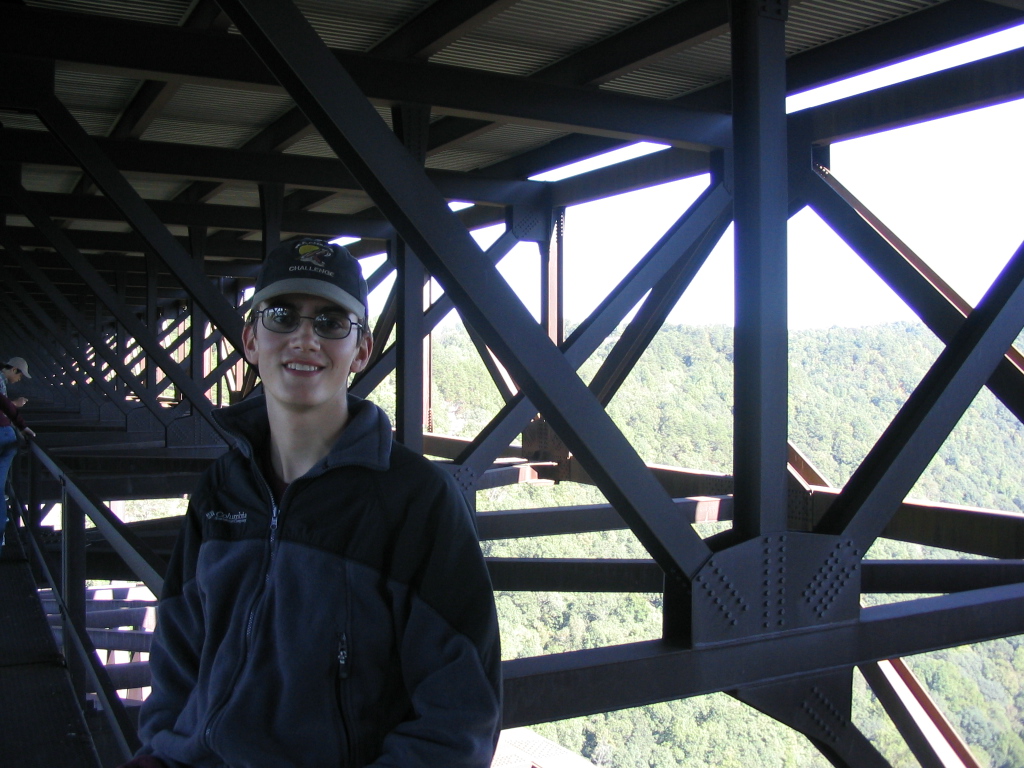
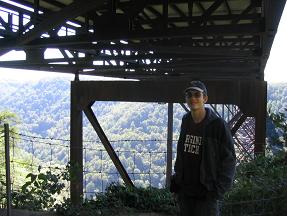
A picture with me in it!After numerous requests after the football game, I made sure that I got a couple of pictues starring yours truly. This also shows you just how big the bridge is. |
|
|
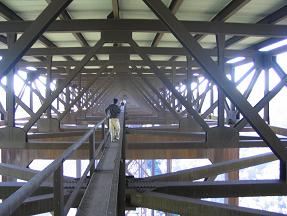
So we climbed up a ladder to get on to the bridge and were immediately presented with this amazing view. It was really interesting to see how long the bridge was... we could have walked over a half a mile and still not reached the other end. It was a really long, really straight line.
|
| So we've been walking for about five minutes and we are still only this far along. We're still well outside of the part of the bridge actually supported by the arch. But if you look near that one concrete support at the lower right, you can see old route 82, which used to be the only way to get across the gorge. |
|
|
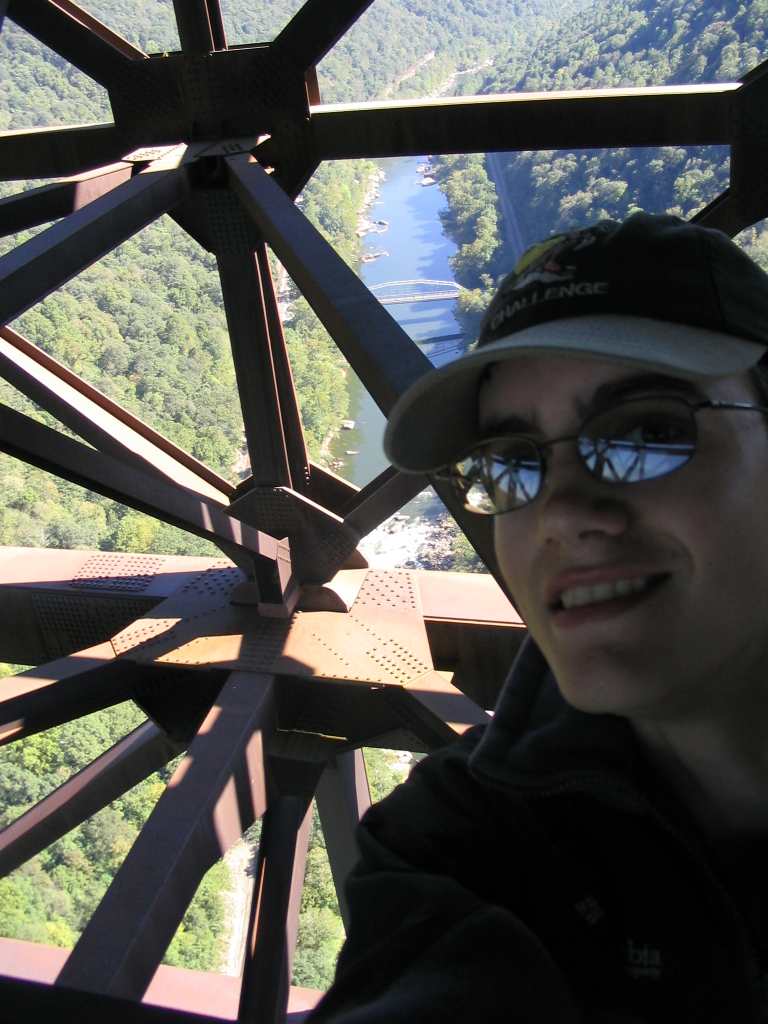
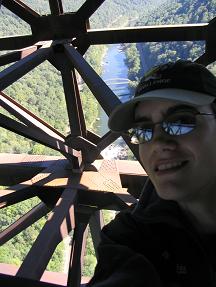
A self portrait at the center of the bridge.
|
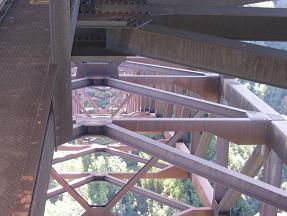
| Peeking over the side of the railing, I found this interesting view. Well, at least I thought it was cool to look down through the arch, anyway. |
|
|
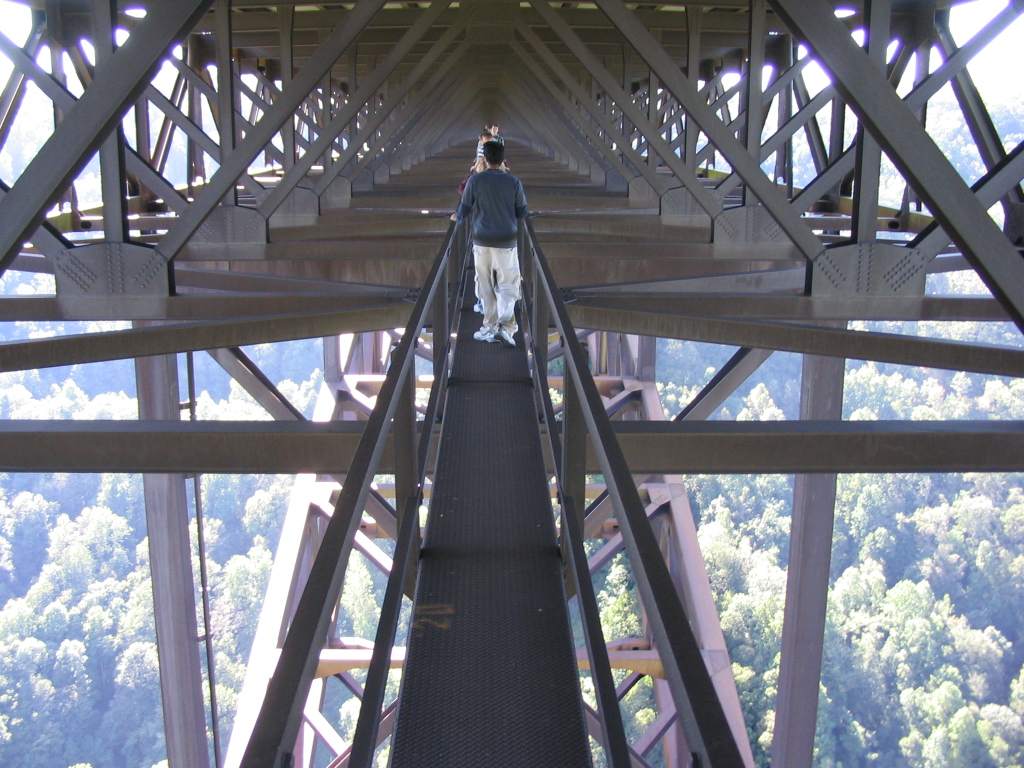
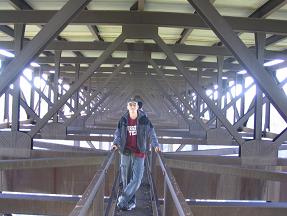
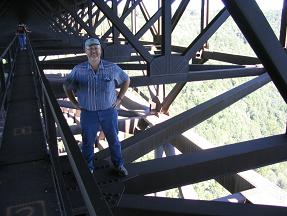
So here we are now, yet another picture of me. I'd like to take this moment to point out what we were walking on: an 18 inch wide steel plate with two handrails and a shin rail. You know, a shin rail. To keep you from slipping out under the handrail. Which would have been really bad.
|
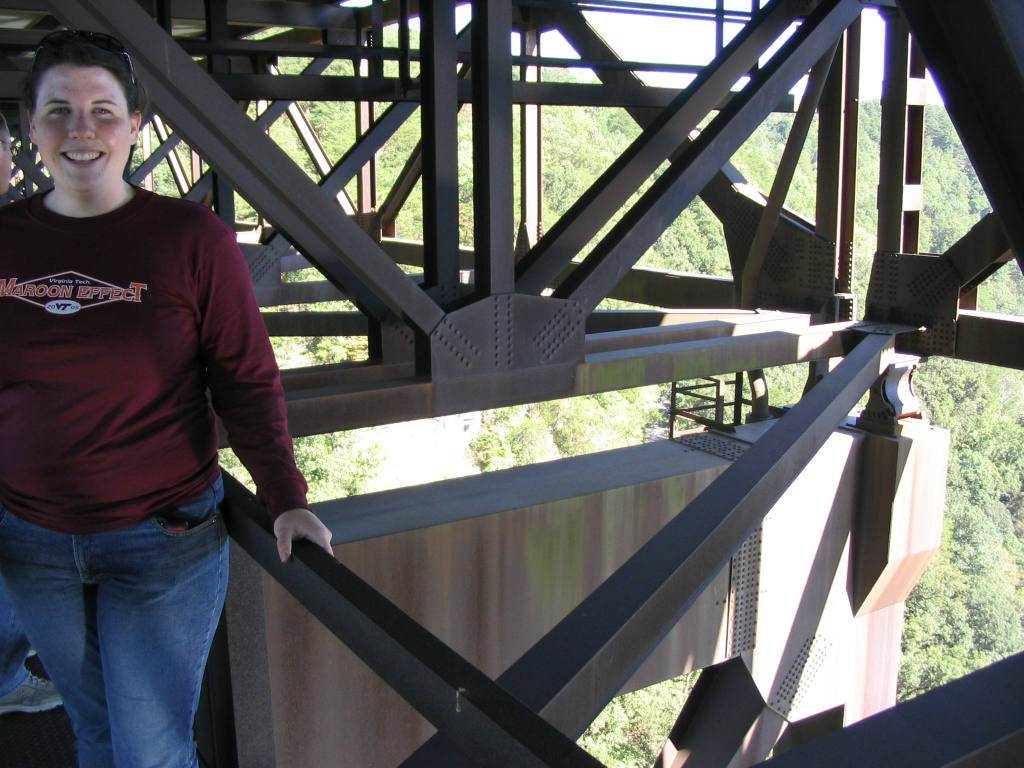
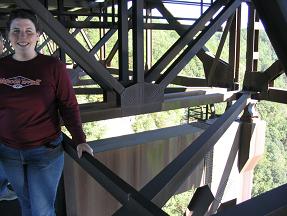
| To give you yet another sense of the scale we are talking about here, the rather large beam in the background of this shot measures approximately 12 feet by 6 feet. |
|
|
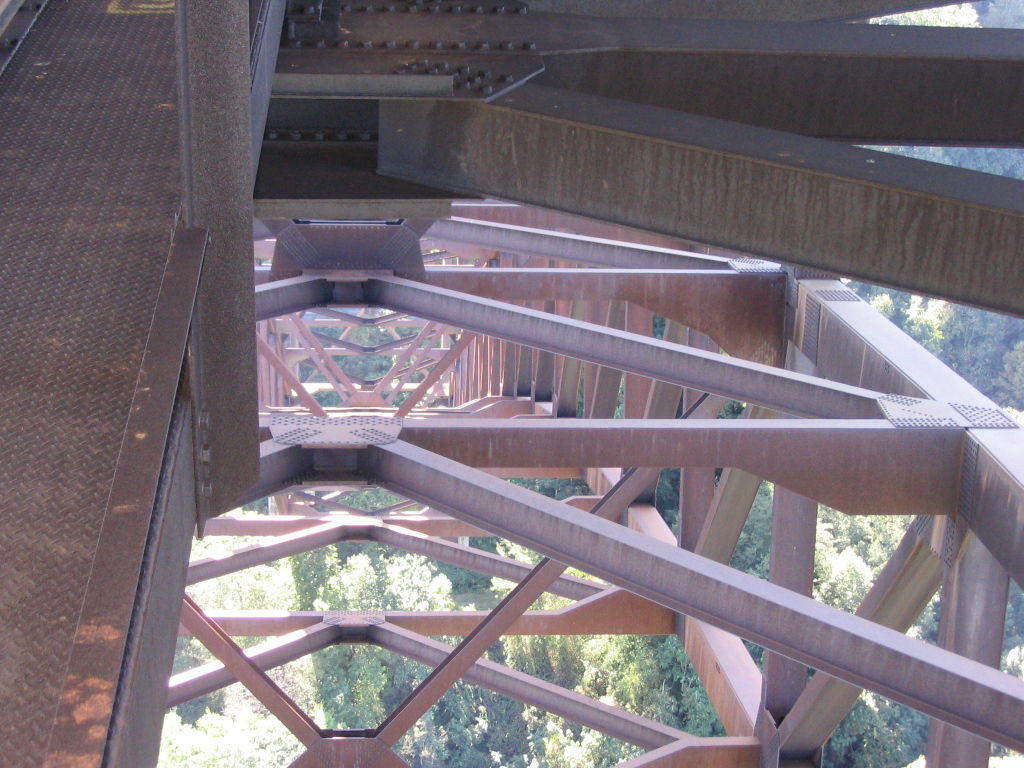
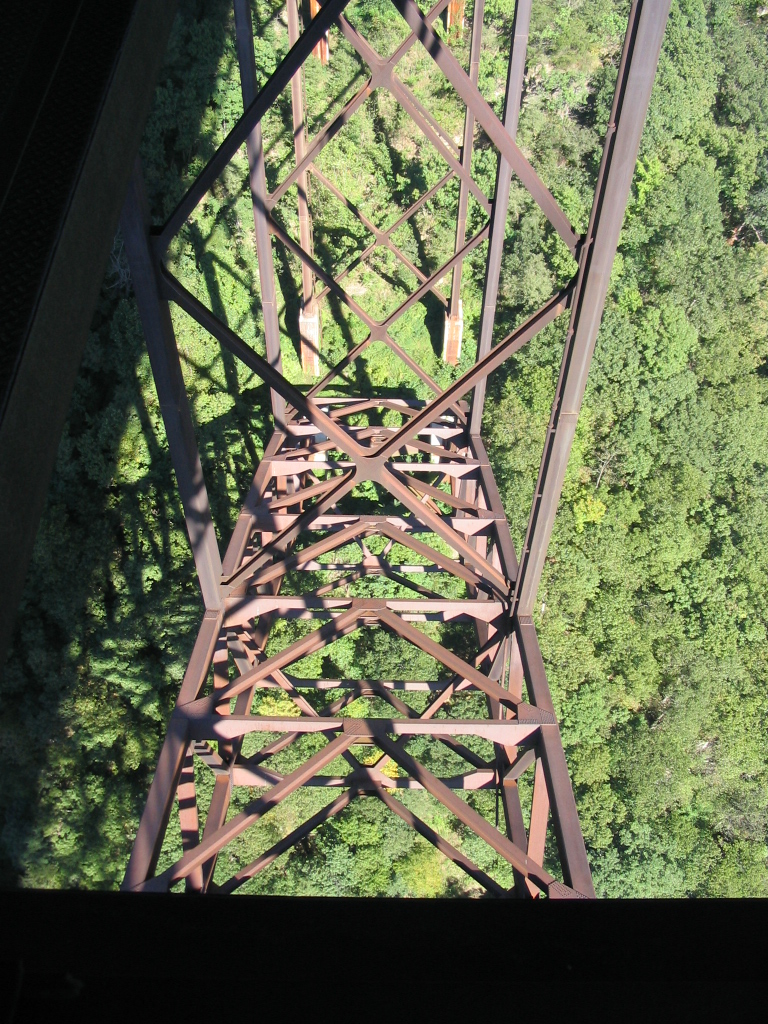
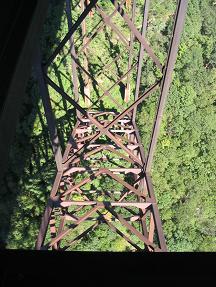
And here's another example of the interesting shots one can find by forgoing a fear of heights and looking over the side. This is a shot of the actual arch part of the bridge seemingly melding into the ground. In actuality, it rests on some house-sized (and that's just above the ground) concrete abutments, which you can't see in this view.
|
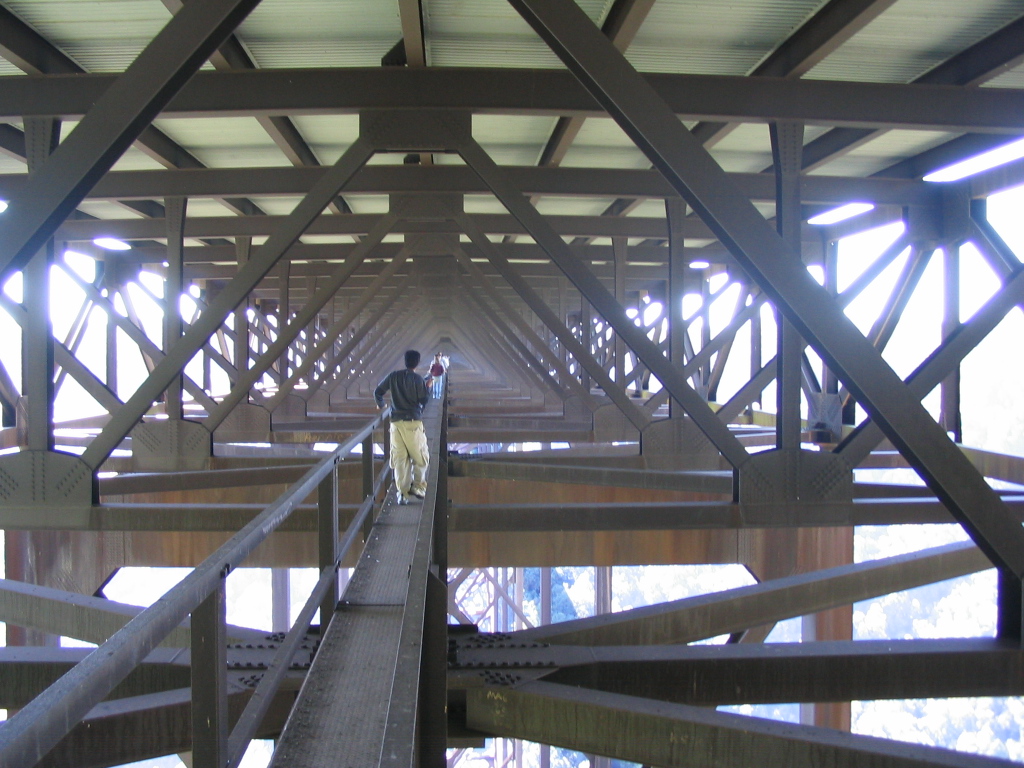
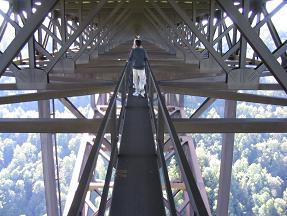
| So after a while we had to turn around and start heading back towards the north end (where the cars were parked), and by holding the camera up, I got this view of the group stretched out along the catwalk with the rising arch behind. |
|
|
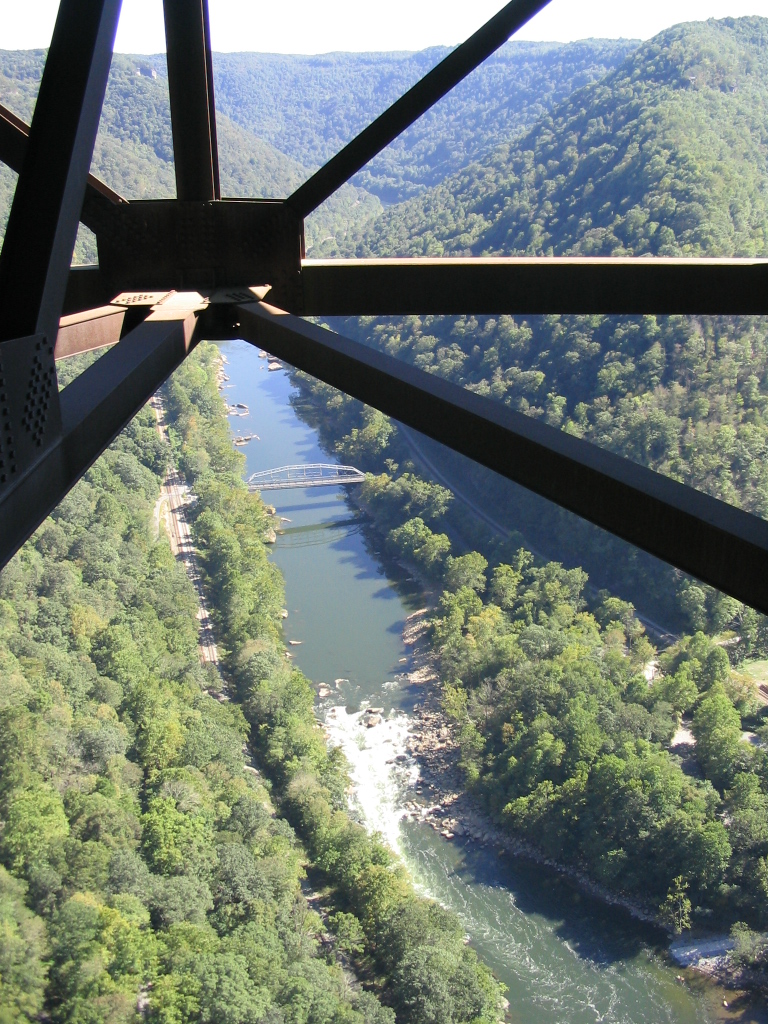
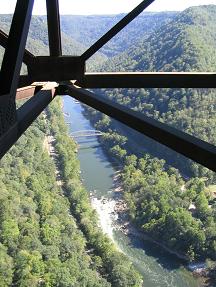
Now this kind of view was just really cool. It was neat to see scenic vistas like this through the wide open spaces in the bridge. These big gaps let the wind flow freely through the bridge, and also give you the chance to realize just how high up you are...
|
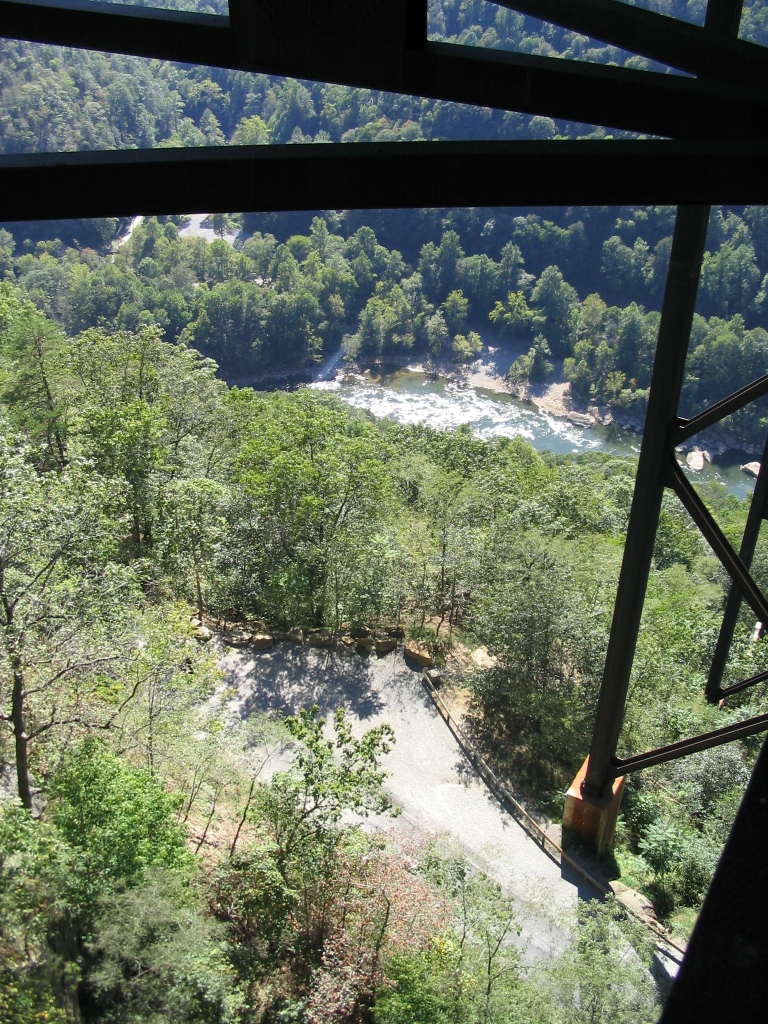
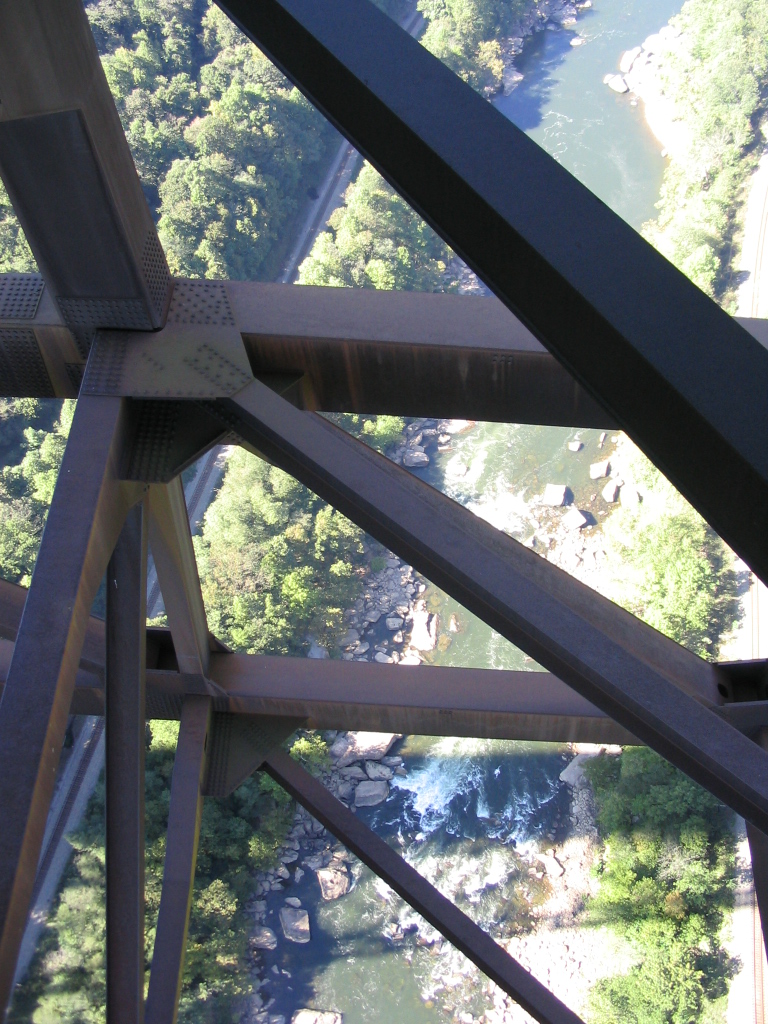
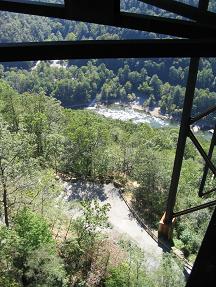
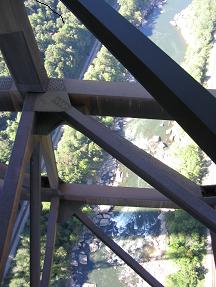
| ...Which is exactly what you realize when you look straight down. This picture was taken near the center of the bridge, and we are looking at Flea Picker rapid (Class III) 870 feet below. |
|
|
Now this is one of our tour guides. I think I can sum it up by saying that you don't have to be crazy to work for the West Virginia highway department, but it helps. Please bear in mind, though, he never walked more than about 5 feet away from the walkway.
|
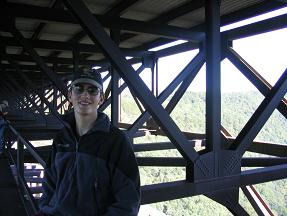
| Yay! More pictures of me! I am actually standing at the center of the bridge. |
|
|
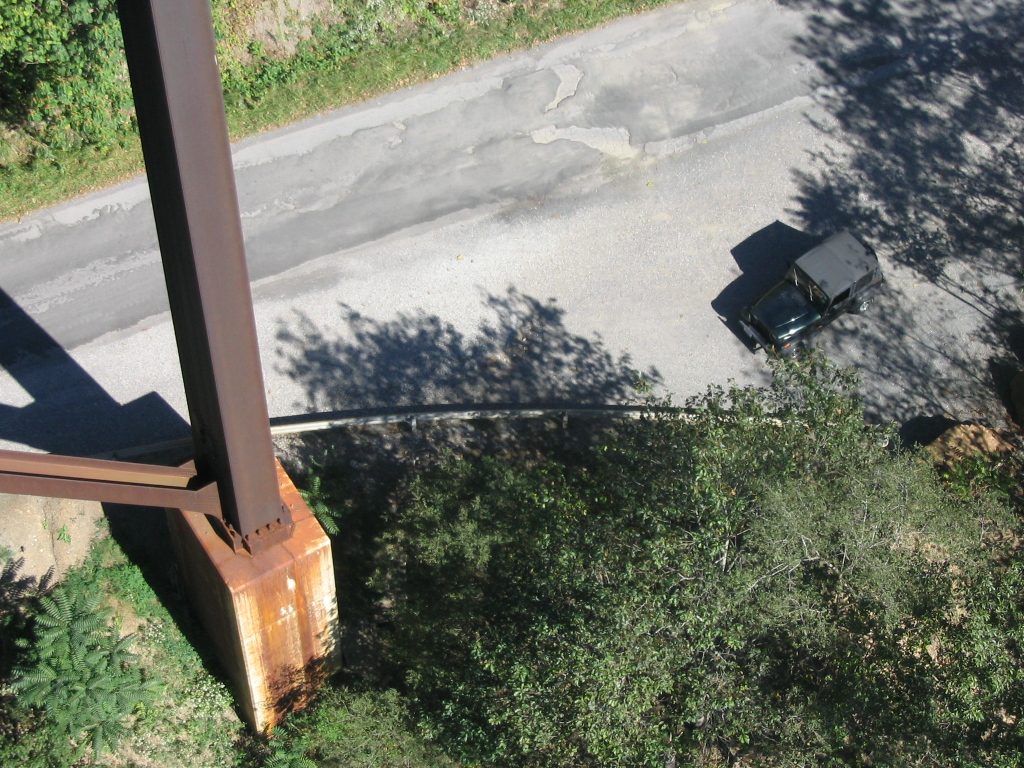
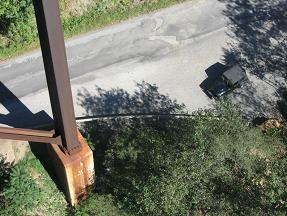
Here's a car parked on route 82 next to one of the bridge's smaller foundations. We are still about 400 feet above in this picture.
|
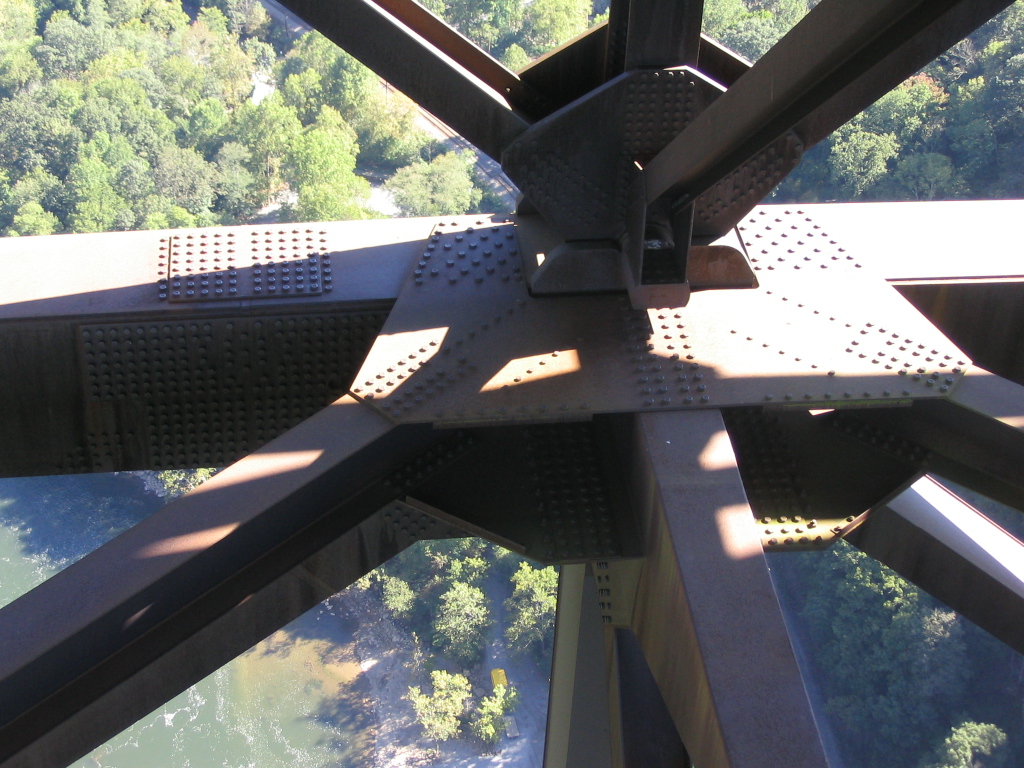
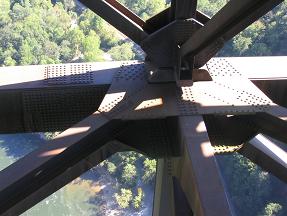
| Look at all of these bolts! The largest joints on the bridge have over 2,700 of them. By virtue of the shear number of bolts, the overall stiffness of the bridge is increased. Because the individual bolt holes have relatively large tolerances, the huge number of bolts reduces the wiggle in the joints. In fact, at the center of the 3,000 foot span, the bridge only shakes about 3 inches when a large truck goes over. Which was disconcerting enough, if you ask me. By the way, this is the center of the bridge (yet again). |
|